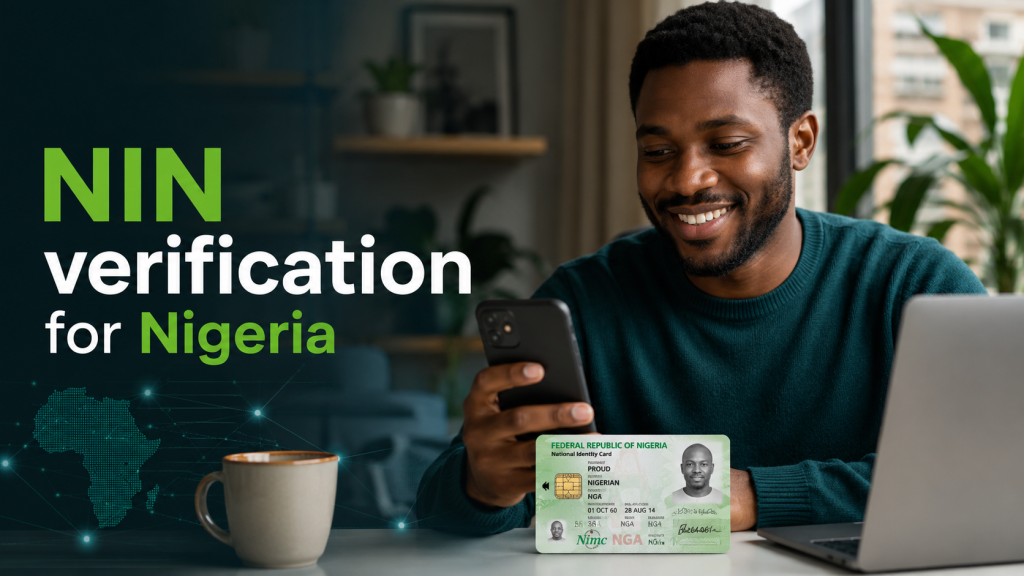
There are a lot of things that you didn’t think you would still need when you go abroad. One of them is your National Identification Number (NIN). You need your NIN for so many things that you keep seeing it pop up: renewing your passport, sending money to family, accessing your bank account, filling out a government form from abroad, the list goes on. Each time, you hit another brick wall, most of the official guidance is based on a Nigerian presence.
This guide gets right to the point. If you’ve ever looked up how to check nin number from your seat in London, Houston or Toronto, you know how quickly that information becomes irrelevant when it suggests you “visit your nearest NIMC center.” So here are the things that work here in 2026 without leaving home for a flight.
Your Nigerian SIM Card Is Still Your Fastest Key
With a Nigerian SIM card, if the card is still activated (even outside of Nigeria) and is the same line you used to register your NIN, you’re blessed. Roaming or local SIM with data? In Nigeria, if your line is active on any device, you can use the USSD code to find out the number of your line 346#. Some diaspora Nigerians have a “dual SIM” phone that is specifically used for this purpose.
The problem is that the cost of each query is N20, and sometimes USSD will not work while roaming. If this doesn’t work, go to the app route instead of trying again and again.
The NIMC MWS App: More Useful Than It Gets Credit For
The NIMC Mobile Web Service (MWS) is a mobile app that is not only available outside Nigeria, but it is also underrated. Here are the things that most guides neglect to tell you:
- No need to be in Nigeria to log in
- The app generates your Virtual NIN (vNIN), which is a temporary and shareable NIN that safeguards your permanent NIN
- It is compatible with Android and iOS.
All you need is the phone number you used to sign up with. If it’s still a live number and you’re able to receive SMS to it, then you can finish the verification of the OTP and view your information from any place on earth.
Things get tougher if your registered number is no longer in use (typical for those that have been living internationally years on years). More on that below.
Virtual NIN vs. Full NIN: Why the Difference Matters for Diaspora Use
Most institutions, particularly banks and financial technology applications, will no longer take your raw 11-digit NIN number. Instead, they need a virtual NIN. This is an intentional move by NIMC to curb NIN fraud.
This is important to diaspora Nigerians because
- A vNIN can only be used for 72 hours after it’s been generated; you can’t save a vNIN for months and then use it.
- A vNIN is generated for each institution (e.g. your bank will send you a request code, input into the NIMC app)
- It is a self-generated by NIMC app, no third party required
This process can be completed entirely remotely, provided you have a registered cell phone number. If the institutions you are dealing in Nigeria require you to submit your NIN for verification, there is a high possibility that it is actually a vNIN they need.
When Your Registered Number Is Dead: The Diaspora Dead-End (And the Workaround)
This is the most common problem and the one no guide addresses properly. You moved abroad, stopped using your old MTN or Glo line, and now you can’t receive the OTP needed to access your NIN online.
Your options in 2026:
Option 1: Nigerian Embassy / High Commission: NIMC have been implementing enrollment and update services at the selected Nigerian embassies and consulates. It varies from country to country, make sure to check the NIMC official website before travelling to your country.
Option 2: A trusted proxy in Nigeria: There’s the option of proxying a family member in a NIMC centre with a signed letter of authorization, a copy of your passport and proof of the registered information. This does work to change your phone number on the system and it will then be possible to access remotely once more.
Option 3: NIMC diaspora helpdesk: NIMC has also an email support line for Nigerians abroad. It usually takes a few hours to update phone numbers associated with overseas addresses; for such requests, the response time has been markedly improved over the past year.
NIN and Financial Compliance: What Your Nigerian Bank Is Actually Checking
Here’s something that trips up a lot of diaspora Nigerians: Your bank isn’t just collecting your NIN as a formality. Nigerian financial institutions are required to match your NIN against NIMC’s database as part of KYC verification in Nigeria. This means the name, date of birth, and biometric records attached to your NIN must match what’s on your bank account.
If there’s a mismatch, even a small one like a middle name discrepancy, transactions can get blocked. This is becoming more common as online NIN verification systems get stricter and more automated across Nigerian banks and fintechs.
If you’re dealing with a frozen account or a failed KYC verification in Nigeria process from abroad, the NIN data mismatch is the first thing to investigate.
Checklist Before You Need Your NIN Urgently
Diaspora NIN errors typically appear when you’re in dire need to finish something. Take steps in advance:
- Verify the registered mobile number of the phone number to NIN
- Install the NIMC MWS app and try your login before it’s too late.
- Create a new vNIN and save, to see that it is functioning
- Ensure that your NIN information (spellings, DOB) are exactly as it appears in your bank records.
- Find out if one of the Nigerian embassies in your area provides NIMC services.
The NIN is not moving, it is becoming even more vital to the financial and governmental framework of Nigeria each year. Access for the diaspora population is also a challenge, but the remote pathways in 2026 are working better than ever. It takes a little know-how to know where to look.
For businesses and platforms that require programmatic verification of their NIN* and other Nigerian identity documents, automated identity verification solutions do the work of identity verification, with real-time cross checks with Nigerian government databanks, without your users having to manually get their hands dirty.