
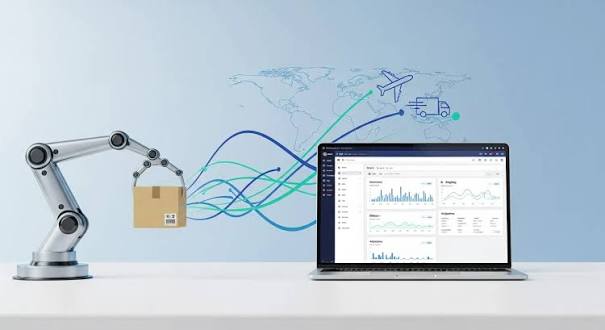
Running an online store often looks simple from the outside: list products, receive orders, and ship them to customers. In practice, the difficult part is keeping dozens of small processes synchronized. Product data changes, stock levels move, orders arrive through different channels, tracking numbers need to reach customers, and suppliers must receive accurate fulfillment information.
Dropshipping removes the need for a retailer to keep every product physically in stock, but it does not remove the need for good systems. In fact, as a store grows, automation and reliable integrations become increasingly important.
For technically minded store owners, the useful way to think about dropshipping is not as a shortcut to e-commerce. It is a distributed workflow in which the storefront, supplier, inventory data, order system, shipping process, and customer communication all need to stay aligned.
Why Dropshipping Changes the Retail Workflow
In a conventional inventory model, a retailer purchases stock in advance, stores it, and ships each order. With dropshipping, the retailer can list products without holding the physical inventory. When a customer orders, fulfillment is handled by the supplier.
This reduces the amount of capital tied up in unsold inventory and can make it easier to test new product categories. The tradeoff is that the retailer becomes more dependent on accurate supplier data and reliable communication between systems.
If an item appears available in the store but is actually out of stock at the supplier, the customer experiences the problem—not the database. That is why operational reliability matters.
Product Synchronization Is More Important Than It Looks
A large catalog creates a data-management problem. Prices can change, inventory can disappear, new variants can be introduced, and products can be discontinued.
Updating all of this manually may be manageable with ten products. It becomes far less practical with hundreds or thousands.
A good integration should reduce repetitive work by keeping important product information synchronized. Retailers should still review what is published, but automation can prevent the store from depending on constant spreadsheet edits.
Inventory Accuracy Protects the Customer Experience
Few e-commerce experiences are more frustrating than paying for an item and later learning that it cannot be shipped.
Inventory synchronization helps reduce this risk, especially when the same supplier serves many retailers. Stock can move quickly, so yesterday’s quantity may not reflect today’s availability.
Store owners should understand how frequently their platform receives inventory updates and what happens when a product reaches zero stock.
U.S.-Based Fulfillment Can Simplify Domestic Selling
For retailers targeting customers in the United States, supplier location affects more than shipping speed. Domestic fulfillment can simplify delivery expectations, tracking, returns, and communication compared with a supply chain that crosses multiple borders.
That does not mean every U.S. supplier is automatically the right supplier. Retailers still need to evaluate product quality, reliability, pricing, return procedures, and the consistency of fulfillment.
Choosing Suppliers Should Be a Process, Not a Guess
Product variety is attractive, but a large catalog is useful only when the underlying suppliers can support the customer experience.
Before relying heavily on a supplier, retailers should examine shipping expectations, tracking availability, stock accuracy, return rules, product information, and how problems are handled.
Testing a smaller selection before expanding can reveal operational issues while the consequences are still manageable.
Where a Supplier Network Can Help
Searching for suppliers one at a time can create significant administrative work, particularly for retailers trying to expand into several product categories.
Platforms that organize multiple suppliers and products in one system can reduce that fragmentation. For U.S.-focused sellers, a directory of dropshippers in the United States can provide a more structured starting point for comparing available products and fulfillment options instead of building every supplier relationship from scratch.
Integrations Reduce Repetitive Store Work
The strongest benefit of an e-commerce integration is not that it makes decisions for the retailer. It is that it removes repetitive transfer work between systems.
A practical workflow may involve importing product information, updating stock, transmitting orders, receiving tracking information, and reflecting changes back in the storefront.
Each manual handoff creates an opportunity for delay or error. Automation is most valuable when it handles predictable tasks while leaving pricing, merchandising, customer service, and business decisions under human control.
Do Not Automate Bad Data
Automation can move information quickly, but it cannot make inaccurate information trustworthy.
Before importing a large catalog, review titles, descriptions, images, variants, dimensions, shipping details, and category assignments. A store filled with duplicated or poorly formatted supplier copy may be technically synchronized while still providing a weak shopping experience.
Retailers should treat supplier data as an input that may need editing rather than automatically publishing everything exactly as received.
Product Variety Is Useful Only With Clear Merchandising
One attraction of dropshipping is the ability to offer more products without purchasing all of them in advance. But adding thousands of unrelated items can make a store harder to understand.
A focused catalog often gives customers a clearer reason to shop. Retailers can use a larger supplier network to test adjacent categories without turning the storefront into an unorganized marketplace.
The goal is not maximum product count. It is enough variety to serve the intended customer while keeping navigation and positioning coherent.
Multi-Channel Selling Creates a Synchronization Challenge
Retailers increasingly sell through more than one channel. A product may appear on a standalone store and one or more marketplaces at the same time.
This increases reach, but it also increases the importance of centralized inventory and order information. If separate channels operate from outdated quantities, the same remaining unit can potentially be sold more than once.
Before expanding to additional marketplaces, retailers should understand how inventory updates flow between the supplier system and every sales channel.
Order Routing Should Be Predictable
An automated order process should have clear states: order received, payment confirmed, supplier notified, fulfillment accepted, shipment created, tracking received, and customer updated.
When something fails, the retailer needs to know where it failed.
A system that simply says ‘processing’ without useful status information makes troubleshooting difficult. Good automation should reduce manual work without hiding operational visibility.
Tracking Information Is Part of the Product Experience
Customers judge an online store partly by what happens after checkout. A tracking number delivered promptly gives the buyer confidence that the order is moving.
Retailers should know how tracking information returns from suppliers, how quickly it appears in the store, and whether customers receive notifications automatically.
This is a small technical detail with a large effect on support workload.
Returns Need a Workflow Too
Dropshipping does not eliminate returns. It changes who physically receives and processes them.
Before listing a supplier’s products, understand the return window, damaged-item process, restocking rules, return address, refund procedure, and who pays return shipping in common situations.
Clear internal procedures help customer-service staff answer questions consistently instead of discovering the rules after a complaint arrives.
Margins Should Include Operational Costs
A product can look profitable when comparing only wholesale cost with retail price. Real margins can also be affected by shipping, marketplace fees, payment processing, returns, advertising, discounts, and customer-support costs.
Retailers should calculate margins using realistic assumptions rather than relying on the difference between two headline prices.
Automation may reduce labor, but it does not remove these other costs.
A Technical Checklist Before Connecting a Dropshipping Platform
Before connecting a supplier or dropshipping service to a live store, check the following:
• Which product fields will synchronize?
• How frequently does inventory update?
• Can price changes overwrite custom retail pricing?
• How are variants mapped?
• How are orders transmitted?
• How does tracking return to the store?
• What happens when an item is unavailable?
• Can products be removed without breaking old order records?
• Which permissions does the integration request?
• Is there a clear way to disconnect the integration?
Security Still Matters in E-Commerce Integrations
Connecting services usually requires account permissions, API credentials, application tokens, or marketplace authorization.
Use separate administrator accounts where appropriate, enable multi-factor authentication, and periodically review connected applications. Remove integrations that are no longer needed.
A supplier integration should receive the access necessary to perform its job, not unlimited access simply because setup is easier that way.
Start Small Before Scaling the Catalog
A retailer does not need to import thousands of products on the first day.
A smaller test makes it easier to evaluate product data, inventory synchronization, order routing, shipping performance, and customer response. Once the workflow behaves predictably, the catalog can expand.
This approach treats scaling as an engineering problem: validate the system under manageable conditions before increasing the load.
Finding the Right U.S. Dropshipping Setup
Retailers looking to expand without holding large amounts of inventory can compare categories, supplier coverage, integrations, shipping expectations, and automation capabilities before choosing a platform.
For sellers specifically targeting domestic fulfillment, resources covering U.S. dropshippers can help narrow the search to suppliers and products designed around the American market.
Final Thoughts
Dropshipping can make it easier for retailers to test products and expand an online catalog without purchasing every item in advance. The model becomes much more useful, however, when the underlying workflow is reliable.
Accurate inventory, clean product data, predictable order routing, tracking updates, sensible integrations, and clear return procedures matter more than simply having access to a huge catalog.
For retailers and suppliers, the best technology is the technology that removes repetitive work without removing visibility. Build a small reliable workflow first, measure where errors occur, and automate the processes that are genuinely predictable.
That approach turns dropshipping from a collection of disconnected tasks into a system that can actually scale.